



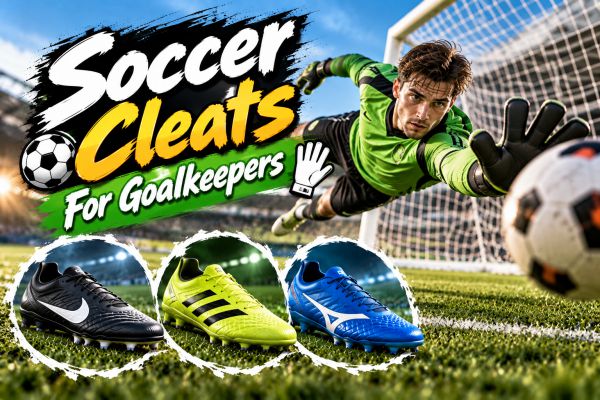
Selecting soccer cleats for goalkeepers requires looking at performance features that differ significantly from outfield positions. Goalkeepers operate in a high-pressure zone where a single slip or misstep can directly result in a goal. From explosive lateral dives and high aerial claims to heavy goal kicks and precise back-pass distribution, keepers need footwear that delivers exceptional footing, powerful energy transfer, and all-day comfort while standing on cold or wet turf.
In this detailed performance guide, we will break down the key technical features, upper materials, soleplate designs, and fit characteristics that define the ideal soccer cleats for goalkeepers so you can protect your clean sheet with complete confidence.
Detailed performance guide: Choosing soccer cleats for goalkeepers
To help shot-stoppers select the ideal match footwear, let’s examine how performance boots tailored for goalkeepers differ across traction stability, striking surfaces, structural support, and pitch surface compatibility.
Which goalkeeper demands fit each cleat design?
Goalkeepers require specialized boot attributes depending on whether their game focuses primarily on traditional shot-stopping or modern sweeper-keeper distribution.
- Traditional Shot-Stoppers: Keepers who prioritize aerial command, physical collisions in the box, and explosive reflex saves need maximum traction stability and upper protection. They benefit from boots featuring classic leather uppers, reinforced heel counters, and sturdy stud bases that absorb heavy impact during landings.
- Modern Sweeper-Keepers: Goalkeepers who frequently act as an extra defender, build play from the back, and execute long-range ping passes require a lighter, control-oriented profile. They thrive in boots with textured synthetic or knit uppers that offer crisp ball feel and clean strike zones for accurate distribution.
Soccer cleats for goalkeepers
Key evaluation of traction stability and striking uppers
Soleplate traction and upper construction directly dictate your footing during dives and the distance of your goal kicks.
- Zero-Slip Traction and Stud Geometry:
- Goalkeepers cannot afford to slip when pushing off for a diving save or jumping to punch a corner kick.
- Soleplates featuring a hybrid of conical and sturdy bladed studs offer a wide, stable contact patch, ensuring firm grounding on wet grass without locking the foot too rigidly into the turf.
- Striking Surface for Goal Kicks:
- The best soccer cleats for goalkeepers incorporate clean, symmetrical or off-center lacing systems to create an unobstructed contact area across the instep.
- Padded leather or textured synthetic uppers dampen impact when launching heavy goal kicks, allowing keepers to clear the ball deep into the opponent’s half without foot soreness.
Fit precision, structural support, and field durability
Because goalkeepers spend long stretches standing in the penalty area combined with sudden explosive bursts, internal boot comfort and soleplate integrity are paramount.
- Fit Dynamics and Joint Protection:
- Goalkeeper cleats should offer an anatomical, stable fit through the midfoot and heel to lock the ankle in place during awkward landings.
- A slightly roomier toe box accommodates thicker match socks and prevents toe bruising during heavy kicking or diving saves.
- Surface Durability and Soleplate Matching:
- Playing in Soft Ground (SG) metal studs on wet, muddy natural grass is essential for keepers to maintain grip during rainy match days.
- For artificial turf courts, choosing dedicated Artificial Grass (AG) or Turf (TF) soleplates prevents joint stress and extends the lifespan of the outsole.
Conclusion
Finding the right soccer cleats for goalkeepers ultimately comes down to prioritizing firm footing, reliable impact protection, and a clean striking surface for long-distance distribution. If your game relies on physical box dominance, reflex saves, and maximum comfort, a classic padded leather boot provides the ideal foundation of stability and protection. If you operate as a modern sweeper-keeper who demands crisp passing touch alongside rapid lateral mobility, a lightweight control-focused cleat is the superior match. Selecting footwear built specifically for the demands of goalkeeping ensures you step into the 18-yard box fully equipped to command your goal.
Related Posts
Soccer Cleats For Defenders: How To Pick The Right Pair
Selecting the best soccer cleats for defenders requires finding a durable, protective, and highly stable boot built to withstand the physical demands of defending. Center-backs and full-backs face a distinct set of challenges on the pitch—from aerial duels and aggressive slide tackles to physical body-ups against fast forwards and rapid recovery sprints. Wearing a paper-thin […]
Soccer Cleats For Midfielders: On-Court Performance Review
Selecting the best soccer cleats for midfielders requires finding a balanced boot engineered for the most demanding role on the pitch. Midfielders are the engine of any team—constantly dictating game tempo, orchestrating play with precise passes, turning in tight spaces under heavy pressure, and covering massive distances from box to box. Wearing a boot that […]
Soccer Cleats For Forwards: Performance And Fit Guide
Selecting the best soccer cleats for forwards requires looking closely at the unique physical demands placed on modern attackers. Strikers, wingers, and center-forwards rely on explosive bursts of speed, sudden directional changes to beat defenders, and clean ball contact when striking on goal. Wearing a heavy or loose-fitting boot can slow down your acceleration and […]
Soccer Cleats For Beginners: How To Pick Your First Pair
Finding the best soccer cleats for beginners can feel overwhelming with the endless variety of brands, stud configurations, upper materials, and price tiers available today. When starting out in soccer, new players often make the mistake of buying top-tier professional boots that are overly stiff, tight, or designed specifically for pristine natural grass pitches. For […]