




Selecting authentic NBA basketball shoes means investing in the absolute highest tier of sports footwear engineering available. Every night on the professional hardwood, elite athletes push their equipment to absolute limits—executing violent deceleration stops, explosive vertical takeoffs, and high-velocity lateral cuts.
Because professional players generate immense biomechanical forces, footwear designed for this level must deliver unyielding structural containment, extreme multi-directional grip, and heavy impact mitigation. Whether you are aiming to match the playstyle of your favorite superstar or simply want a shoe that protects your joints during intense games, understanding what defines pro-grade footwear is essential.
This comprehensive guide analyzes the strict engineering benchmarks behind pro-tier sneakers, key technical features to evaluate, playstyle-matched shoe categories, and practical advice on sizing and court durability.
Pro performance standards: Evaluating elite NBA basketball shoes
The rigorous engineering benchmarks required for NBA-tier performance
Footwear built for elite basketball competition must satisfy demanding physical parameters that casual sneakers cannot match:
- Sustaining massive lateral torque: When an athletic player plants hard to change direction or slide defensively, heavy side-to-side force is applied to the upper. Pro-level footwear utilizes reinforced sidewalls, TPU support cages, and wide outriggers to prevent foot blowout.
- Instantaneous stopping bite: Professional hardwood courts demand flawless traction. Outsoles must use high-friction, pliable rubber compounds molded into aggressive tread patterns that bite the floor immediately without slipping.
- Cumulative joint impact mitigation: Repetitive jumping and sprinting across an 82-game season creates massive joint strain. Pro-tier footwear integrates thick, energetic foam stacks and volume air units to absorb landing forces before they travel into your knees and lower back.
Core technical pillars powering modern NBA basketball footwear
Before selecting a pair from current elite releases, evaluate prospective models against these four mandatory engineering criteria:
- Lively, high-response cushioning stacks
Modern pro-level midsoles rely on advanced nitrogen-infused foams (such as Nike ZoomX/Cushlon, Li-Ning Boom, or Puma Nitro) often paired with responsive air units. These systems compress upon landing and recover instantly, giving you explosive propulsion off the floor. - Rigid midfoot shank plates (Carbon fiber or TPU)
A stiff shank plate embedded in the midfoot acts as a torsional bridge. It stops the shoe from twisting unnaturally at the arch during plants, ensuring smooth force distribution and protecting against arch strain. - Heavy-duty heel counters and internal lockdown
Maximum performance requires zero foot slippage inside the shoe. Rigid internal heel cups and multi-point lacing setups lock your rearfoot firmly against the footbed, eliminating heel lift during rapid decelerations. - Flared lateral outrigger bases
The primary physical defense against rolled ankles is a wide outsole footprint. An extended rubber outrigger near the pinky toe acts as a stabilizer, keeping your foot centered during sharp side-to-side cuts.
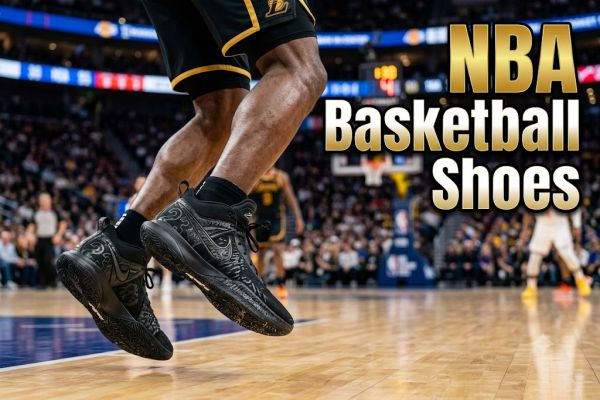
NBA Basketball Shoes
Matching NBA-grade footwear architectures to player positions and archetypes
When exploring NBA basketball shoes, choosing a model that aligns with your specific body type and court role ensures peak results:
- For quick guards and playmakers (Speed & Low-Stack Court Feel)
- Focus: Minimalist stack heights, springy forefoot Zoom Air or nitrogen foam, biting multi-directional traction.
- Top Profiles: Signature guard lines—such as the Nike Ja series, Nike Sabrina line, or adidas Dame Certified series—deliver razor-sharp court feel and instant acceleration for downhill drives.
- For explosive wings and slashers (Versatile Pop & Unyielding Containment)
- Focus: Full-length responsive cushioning, rigid carbon shank plates, structured upper overlays.
- Top Profiles: High-flying signature performers—like the adidas AE (Anthony Edwards) series, Nike Air Jordan main line, or Way of Wade main line—provide energetic takeoff spring and elite lateral containment.
- For power forwards and centers (Max Shock Absorption & Heavy Support)
- Focus: High-volume hybrid cushioning stacks, robust heel cages, wide stable outsole footprints.
- Top Profiles: Heavy-duty models—such as the Nike LeBron main line, 361° Joker series (Nikola Jokić), or New Balance Fresh Foam BB line—deliver maximum impact dampening for players landing heavily in the paint.
Sizing accuracy, break-in protocols, and court surface longevity
Maximizing your performance investment requires proper fitting habits and surface care:
- Securing a true 1:1 performance fit: Pro-tier basketball shoes are sculpted for snug, athletic containment. Standard-width players should choose their true size to eliminate internal foot sliding. Wide-footed players should carefully evaluate midfoot width or consider sizing up by a half-size.
- Managing the break-in window: Due to rigid composite shank plates and structured support cages, elite performance models typically require two to three practice sessions to flex and conform naturally to your foot’s dynamic bend points.
- Indoor vs. outdoor court usage: Most flagship pro-level models use soft, tacky rubber outsoles optimized specifically for clean indoor hardwood. Taking soft rubber onto abrasive outdoor concrete will rapidly strip away the traction tread and shorten the shoe’s lifespan.
Summary
Investing in authentic NBA basketball shoes gives hoopers access to the absolute best sports technology available. By focusing on high-response cushioning, rigid torsional shank plates, and biting multi-directional traction that match your personal playing style, you can step onto the floor with enhanced speed, maximum joint safety, and complete confidence.
Related Posts
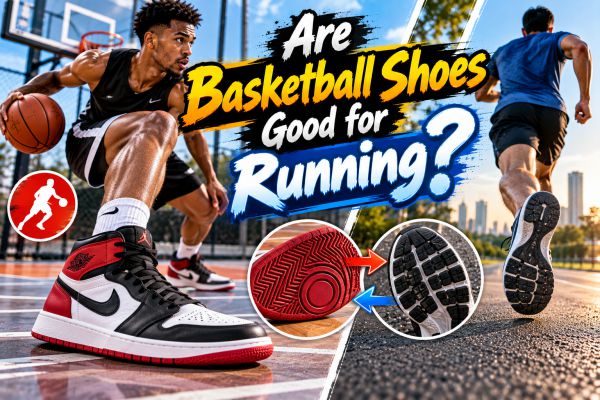
Are Basketball Shoes Good for Running? Complete Guide
If you find yourself asking, “Are Basketball Shoes Good for Running?“, the quick answer is no—they are generally not recommended for regular running or long-distance workouts. While both running shoes and basketball sneakers are designed for athletic performance, they are engineered for fundamentally opposite movement patterns and biomechanics. Basketball shoes are built for multi-directional stability, […]
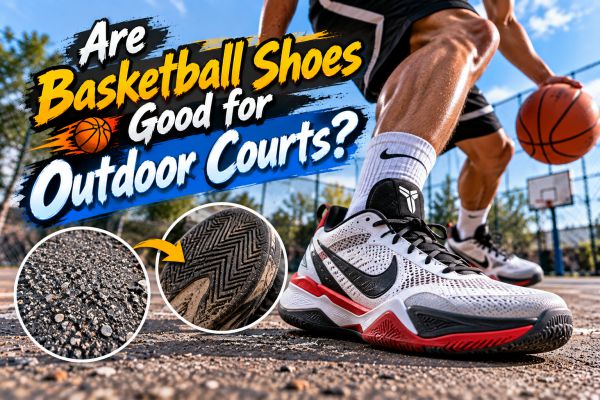
Are Basketball Shoes Good for Outdoor Courts? On-Court Guide
If you are asking yourself, “Are Basketball Shoes Good for Outdoor Courts?“, the short answer is yes—but with several important caveats. While basketball shoes are fundamentally designed to handle the intense lateral movements, rapid accelerations, high-impact jump landings, and sudden stops inherent to the game, not all basketball shoes are built to survive the harsh […]
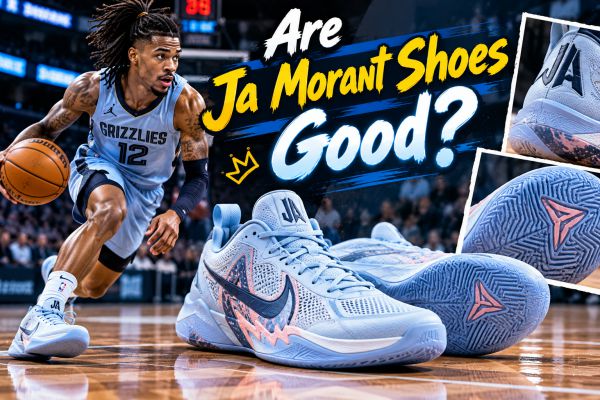
Are Ja Morant Shoes Good? On-Court Performance Review
If you are wondering, “Are Ja Morant Shoes Good?“, you are not alone. As one of Nike’s most popular signature basketball lines, Ja Morant’s signature sneakers (such as the Ja 1 and Ja 2) have gained massive attention for their eye-catching colorways, accessible price point, and direct connection to one of the NBA’s most electrifying […]
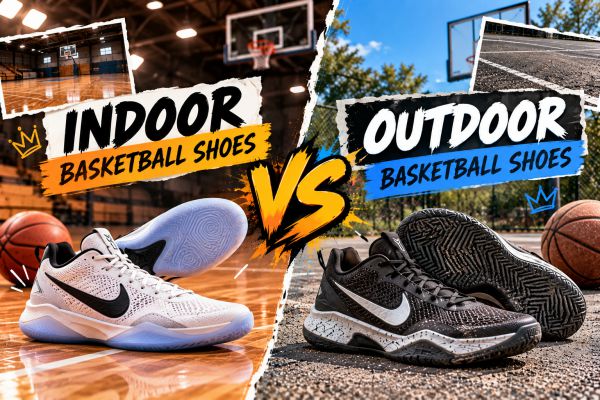
Basketball Shoes vs Training Shoes: Which One Do You Need?
Choosing between Indoor vs Outdoor Basketball Shoes is one of the most critical decisions a hooper can make when buying a new pair of kicks. While both types of basketball shoes may look nearly identical on the shelf, they are engineered with vastly different rubber compounds, outsole patterns, and upper materials. Wearing an indoor shoe […]