





Finding the best basketball shoes for wide feet is often an exhausting trial-and-error process for players who struggle with standard retail models. Most modern performance basketball shoes are built on narrow lasts derived from professional player profiles, leaving wide-footed players to deal with severe midfoot pinching, painful lateral blowouts, bruised pinky toes, and restricted blood circulation during intense games.
When your shoes do not accommodate your natural foot width, your feet slide around inside the upper, your toes jam into the front box during hard stops, and your arches lose proper support. Accommodating a wide forefoot without sacrificing lockdown, explosive responsiveness, or ankle stability requires looking beyond aesthetic trends and focusing on specific structural designs: roomier toe boxes, flexible upper materials, wide outsole platforms, and customizable lacing systems.
This comprehensive guide breaks down the physical challenges of wide feet on the court, key design elements to prioritize, targeted shoe profiles, and practical fitting tips to ensure total comfort.
A complete selection guide to wide-foot basketball footwear
Understanding the biomechanical challenges of wide feet on court
Playing basketball with wide or flat feet introduces distinct mechanical hurdles that standard footwear designs rarely account for:
- Forefoot compression and blowout: During aggressive lateral cuts, your forefoot expands and pushes outward against the sides of the shoe. If the upper is constructed from rigid, unyielding materials or built on an overly narrow last, your foot will eventually tear through the lateral side seams or hang over the edge of the midsole.
- Friction and blister formation: Pinching across the metatarsal bones creates high-friction zones, leading to painful blisters, calluses, and bruised toenails caused by toes crowding into a tapered toe box.
- Compromised stability: Choosing a shoe that is simply a half-size or full-size too long to accommodate extra width creates a dangerous gap in front of your toes. This causes your foot to slide forward during landings, destroying your court feel and increasing the risk of jammed toes or rolled ankles.
Essential technical features that wide-footed players need
Before purchasing your next pair of basketball shoes, evaluate models against four mandatory structural criteria engineered specifically to support broader feet:
- Anatomically wide lasts and spacious toe boxes
Look for models specifically known for accommodating broader feet or brands that offer dedicated wide-width options. A rounded, generous toe box allows your toes to splay naturally during impacts, preventing the painful pinching common in elite-performance guards’ models. - Adaptable, flexible upper materials
Avoid rigid, single-piece synthetic uppers that lack give. Instead, prioritize multi-layer engineered meshes, soft textiles paired with fused overlays, or supple leathers that stretch slightly and mold to your exact foot shape during the break-in period. - An expansive outsole base and flat platform
Wide feet often correlate with a lower arch or flatter foot profile. A wide, flat outsole footprint combined with a prominent lateral outrigger ensures your foot remains centered over the cushioning stack, preventing your foot from spilling over the midsole edge during hard defensive slides. - Dynamic, modular lacing systems
Webbed lacing eyelets, independent lace loops, or midfoot straps allow you to customize tension across different zones of your foot. This lets you loosen the forefoot for extra breathing room while locking down tightly across the ankle and instep to prevent heel slip.
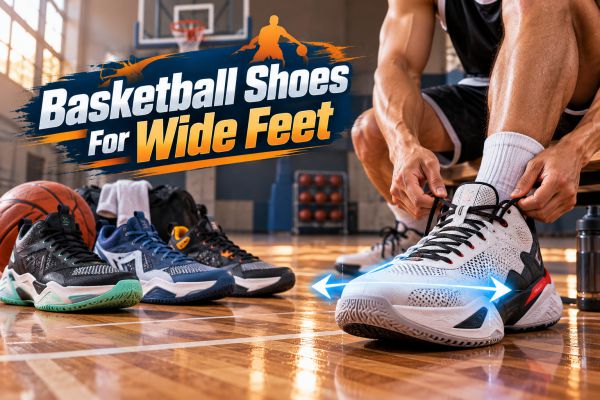
Basketball shoes for wide feet
Shoe profiles tailored to different wide-foot playing styles and brands
When searching for the best basketball shoes for wide feet, certain brand lineups and performance models consistently stand out for their accommodating fits:
- For maximum room and orthotic compatibility (Extra-Roomy Performance)
- Focus: Deep volume toe boxes, removable insoles, straight-last designs.
- Top Shoe Profiles: Brand lines like New Balance (frequently offering dedicated “2E” wide versions in models like the Fresh Foam BB or TWO WXY series) and select adidas performance models (such as the Harden or Don Issue lines, known for broader midfoot platforms) provide exceptional space without sacrificing structural support.
- For explosive guards needing width and stability (Agile Wide-Foot Options)
- Focus: Flexible forefoot uppers, wide base platforms, responsive cushioning.
- Top Shoe Profiles: Performance models like the Puma All-Pro Nitro or select Li-Ning / Way of Wade mid-tier options feature forgiving textile uppers and broad outsoles that comfortably cradle wider forefeet while maintaining elite court feel and bounce.
- For heavy players and big men with wide feet (Maximum Cushion & Containment)
- Focus: High-volume interiors, thick supportive uppers, robust lateral outriggers.
- Top Shoe Profiles: Robust models like the Nike LeBron main line (when sized up appropriately or selected in accommodating colorways) or supportive heavy-duty releases offer the substantial structural volume needed to contain large, wide feet during intense post play.
Fitting, sizing, and break-in strategies for wide feet
Proper fitting habits and adjustment techniques ensure your wide-foot basketball shoes perform safely and comfortably from day one:
- When to try on and measure your feet: Always try basketball shoes on later in the day or immediately after a workout when your feet are at their maximum volume. Wear the exact performance socks and ankle braces you plan to use during games to ensure accurate spacing.
- The half-size rule vs. wide-width models: If a shoe is available in a dedicated wide (2E) sizing option, buy your true length in that wide variant. If you are buying standard-width performance shoes that run notoriously narrow, going up a half size is acceptable only if the midfoot and heel lockdown remain secure enough to prevent sliding.
- Strategic lacing adjustments for high-volume feet: If the midfoot feels too tight, skip the lower eyelets closest to your toes and lace through the upper rows to relieve direct pressure across the top of your metatarsals. Conversely, utilize runner’s loops at the ankle to anchor your heel securely so you don’t slide forward into the toe box.
Summary
Managing wide feet on the basketball court requires prioritizing functional fit over marketing hype. Look for anatomical toe boxes, flexible yet structured uppers, wide stable outsole bases, and brands that offer dedicated wide-sizing options. Choosing footwear engineered to accommodate your natural foot width eliminates painful pinching, protects your joints, and gives you the comfort and stability needed to perform at your absolute best.
Related Posts
Basketball Shoes For Ankle Support: Lockdown & Grip
Searching for the best basketball shoes for ankle support is a top priority for players dealing with previous ankle sprains, weak ligaments, or the fear of landing awkwardly on another player’s foot. Ankle injuries represent the most common trauma in basketball, often sidelining players for weeks or resulting in chronic instability if not protected properly. […]
How To Choose the Right Basketball Shoes For Beginners
Selecting the best basketball shoes for beginners is a crucial first step when entering the sport. Unlike experienced players who already know their exact court position, foot mechanics, and brand preferences, new players need footwear that offers all-around protection, reliable comfort, and great value for money. Stepping onto a basketball court introduces foot movements that […]
Basketball Shoes For Indoor Courts: Balancing Hardwood Grip And Explosive Responsiveness
Selecting the best basketball shoes for indoor courts allows players to unlock their full athletic potential. Unlike rough concrete blacktops that shred outsoles within weeks, indoor hardwood and synthetic courts offer a clean, springy playing surface. This controlled environment enables manufacturers to utilize softer, sticky rubber compounds and ultra-responsive cushioning systems designed purely for elite […]
Basketball Shoes For Outdoor Basketball: Protecting Your Joints And Your Footwear
Selecting the best basketball shoes for outdoor basketball requires a completely different mindset than shopping for an indoor pair. While playing on polished hardwood provides natural shock absorption and preserves soft rubber outsoles, outdoor streetball courts act like sandpaper on your footwear while exerting harsh, unrelenting forces on your joints. Many players make the mistake […]