



Basketball Shoes For Outdoor Basketball: Protecting Your Joints And Your Footwear

Selecting the best basketball shoes for outdoor basketball requires a completely different mindset than shopping for an indoor pair. While playing on polished hardwood provides natural shock absorption and preserves soft rubber outsoles, outdoor streetball courts act like sandpaper on your footwear while exerting harsh, unrelenting forces on your joints.
Many players make the mistake of taking premium indoor signature models onto blacktop, only to watch the traction grooves grind down completely within a few weeks. Furthermore, raw concrete offers zero flex, transmitting maximum landing impact straight into your ankles, knees, and lower back.
To prevent premature shoe wear and protect your body from joint fatigue, you need footwear engineered with high-density rubber compounds, deep tread patterns, and resilient cushioning stacks. This guide breaks down the physical demands of outdoor play, essential technical features to look for, targeted shoe recommendations, and practical care tips.
A complete selection guide to outdoor basketball footwear
Understanding the unforgiving nature of concrete and asphalt courts
Playing basketball outdoors imposes a unique set of physical stresses on both your body and your gear:
- Rapid outsole abrasion: Blacktop and raw concrete surfaces strip away soft, sticky rubber rapidly. Outsoles designed exclusively for indoor courts often rely on pliable compounds that disintegrate when subjected to outdoor friction.
- Unforgiving impact surface: Hardwood floors are built over sub-floor systems that flex slightly upon impact. Outdoor courts offer zero elasticity. Every jump, rebound, and sudden stop forces your foot to absorb 100% of the kinetic feedback.
- Dust and debris accumulation: Outdoor courts accumulate dust, dirt, and small pebbles. Tread patterns with thin, tightly packed grooves trap dust quickly, leading to dangerous slips during hard cuts or drives.
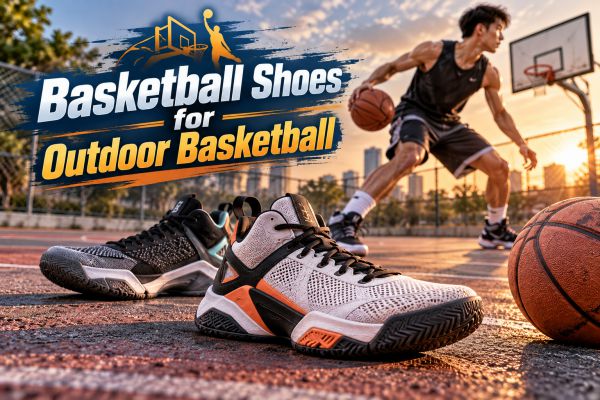
Basketball shoes for outdoor basketball
Key technical features to look for in an outdoor basketball shoe
Before purchasing a pair of shoes for streetball or park games, evaluate the model against these four non-negotiable structural elements:
- High-density rubber compounds (XDR or solid rubber): Look for shoes specifically built with extra durable rubber compounds (often labeled as XDR by Nike, or specialized outdoor rubber by Asian brands like Li-Ning, Anta, and Peak). Avoid translucent or soft, pliable rubber outsoles, as they degrade far too quickly on rough surfaces.
- Deep, thick traction grooves: Traction design matters just as much as rubber density. Opt for wide, deep herringbone or aggressive radial patterns. Deep grooves take longer to wear down to a smooth surface, while wider spacing allows dust and dirt to shed naturally during play.
- Dense, high-volume shock absorption: Because concrete offers no give, lightweight or overly thin midsoles will leave your feet feeling sore after an hour of play. Look for resilient foam midsoles (such as Nike Cushlon/Renewal, adidas Lightstrike/Boost, or Li-Ning Boom) paired with responsive air units that do not bottom out under impact.
- Reinforced upper materials: Toe drags and lateral scrapes on concrete quickly rip through soft knit or thin mesh uppers. Choose shoes featuring synthetic leather overlays, thick canvas, or TPU-reinforced toe caps to resist abrasion during aggressive plays.
Shoe profiles tailored to different outdoor player needs and budgets
Not every player requires the same type of outdoor shoe. Matching your choice to your playing style and budget ensures the best value when looking for the best basketball shoes for outdoor basketball:
For maximum durability and budget-conscious players
- Focus: Ultra-hard rubber outsoles, reinforced uppers, affordable price points.
- Top Shoe Profiles: Asian performance footwear brands lead this category. Models like the Li-Ning Wade Fission / Son of Flash series or Anta Shock Wave series are engineered specifically for rough outdoor courts, offering rock-solid rubber outsoles that last for seasons.
For outdoor guards and slashers (Agility & breathability)
- Focus: Low-profile responsive cushioning, deep herringbone grip, stable lateral outriggers.
- Top Shoe Profiles: Shoes such as the Nike G.T. Cut Academy, adidas Dame Certified series, or Puma Triple line provide excellent court feel and tough rubber traction without sacrificing fast first-step responsiveness.
For big men and players needing maximum joint protection
- Focus: Thick cushioning stacks, rigid midfoot shank plates, wide stable bases.
- Top Shoe Profiles: Heavy-duty models like the Nike LeBron Witness / NXXT Gen (with outdoor rubber option) or New Balance Two WXY series offer thick, protective midsoles to absorb severe impact forces from hard court landings.
Maintenance and rotation tips to extend the lifespan of your outdoor shoes
Proper care and usage habits can double the lifespan of your outdoor basketball footwear:
- Reserve your outdoor shoes strictly for the court: Avoid wearing your basketball shoes while walking on sidewalks or driving to the court. Asphalt walking wears down the specialized tread edge angles that provide stopping power during a game. Change into your shoes right when you arrive at the court.
- Clean dirt out of the tread regularly: After playing on dusty courts, use a stiff-bristled brush to knock out embedded dirt and small rocks from the traction grooves. Allowing dirt to remain packed in the rubber can compromise grip and accelerate tread tearing.
- Know when to retire your pair: Once the rubber tread wears smooth in high-pressure areas (like the ball of your foot or under the big toe), the shoe loses its stopping power. Furthermore, midsole foams lose their shock-absorption capacity over time. If you begin experiencing unusual shin splints or knee soreness after games, it is a clear signal that the cushioning has compressed fully and needs replacement.
Summary
Playing on concrete and blacktop demands footwear that can withstand severe friction while protecting your body from harsh impacts. Prioritize dense rubber compounds, deep traction patterns, and supportive cushioning over indoor cosmetic trends. Investing in footwear engineered specifically for outdoor conditions will keep you performing at your best while protecting your joints and your wallet.
Related Posts
Basketball Shoes For Centers: Balancing Impact Cushioning And Court Stability
Finding the best basketball shoes for centers is one of the most critical footwear decisions a big man can make. While lightweight guards thrive on thin midsoles and razor-sharp court feel, centers operate in a high-impact zone dominated by physical post-up battles, heavy screen setting, violent box-outs, and intense landing impacts after contested rebounds. When […]
Basketball Shoes for Guards: What Matters Most on the Court?
Playing guard in basketball requires constant movement, quick reactions, and precise control. Whether you handle the ball as a point guard or create scoring opportunities as a shooting guard, your shoes influence how confidently you move on the court. Every acceleration, sudden stop, crossover, and defensive slide places different demands on your footwear. However, choosing […]

[Top-Rated] The Best Basketball Shoes For Ankle Support 2025
When participating in basketball competitions, the occurrence of injuries is widespread. To avoid those problems, you need the best basketball shoes for ankle support. There are many types of basketball shoes on the market. However, when it comes to ankle support, not all shoes are created equal. In this article, Scott Fujita will guide you […]

Spalding TF-1000 Classic Review: Is It The Best Basketball?
The Spalding TF 1000 Classic is the legendary indoor basketball for those who grew up with basketball in their memory. The image of this ball is associated with the NBA tournament. It has been an icon of basketball for a long time. Time flies, and things aren’t as they used to be, and at some […]