





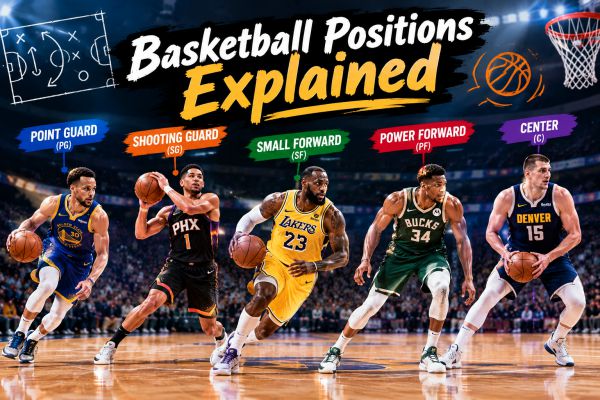
When basketball positions explained is what you are looking for, watching a game for the first time can still feel a bit overwhelming. Players move fluidly across the hardwood, passing, shooting, and switching assignments in a matter of seconds. However, underneath the fast-paced action, basketball is built on a foundation of five distinct positions. Whether you are trying to understand a game on TV, setting up your team in a local league, or picking players for a video game, knowing what each role does changes how you experience the sport. Every player on the floor has a specific job, a unique skill set, and a designated spot on the court that keeps the team functioning like a well-oiled machine.
Understanding the 5 basketball positions on the court
To make sense of basketball, it helps to break the team down into its traditional building blocks: guards, forwards, and the center. Originally, these positions were defined strictly by height and where players stood on the court. Today, the game has evolved into a much more versatile style, but the core responsibilities of each role remain the foundation of basketball strategy.
Guard positions: Point guard (1) and shooting guard (2)
Guards typically operate on the perimeter, usually starting plays near the three-point line and orchestrating the offense from the top of the key.
- The Point Guard (Position 1): Often called the “coach on the floor,” the point guard is usually the primary ball-handler and playmaker. Their main job is to bring the ball up the court, call the plays, read the opposing defense, and pass the ball to teammates in scoring positions. Quick decision-making, exceptional passing vision, and steady ball-handling under pressure are essential for this role. Notable historical examples include Magic Johnson and Steve Nash.
- The Shooting Guard (Position 2): As the name implies, the shooting guard is typically one of the team’s best perimeter shooters and scorers. While they can help bring the ball up the floor, their primary focus is finding open spaces to shoot three-pointers or driving aggressively to the basket. Defensively, they are often tasked with guarding the opponent’s best perimeter scorer. Legendary players like Kobe Bryant defined this position through elite scoring and lockdown defense.
Basketball positions explained
Forward positions: Small forward (3) and power forward (4)
Forwards bridge the gap between the perimeter guards and the interior center, playing a hybrid role that demands both outside skills and inside toughness.
- The Small Forward (Position 3): Widely considered the most versatile player on the court, a small forward needs a mix of speed, strength, and skill. They can score from the perimeter, drive through the lane, and defend multiple positions (both guards and larger players). Because of their adaptability, small forwards often act as secondary playmakers and reliable rebounders. Players like LeBron James have showcased how a dominant small forward can control every aspect of a game.
- The Power Forward (Position 4): Positioned closer to the basket, the power forward combines size and strength with physical presence. They do much of the “dirty work”—setting hard screens, fighting for rebounds in heavy traffic, and scoring close to the rim. Modern power forwards are also expected to stretch the floor by hitting mid-range or three-point shots. Tim Duncan is a classic example of a disciplined, highly effective power forward.
The center (5): Anchor of the paint and defense
The center is traditionally the tallest player on the court, stationed primarily right under the basket in an area known as the paint or the low post.
- Core Responsibilities: On offense, the center acts as a primary screen-setter, uses their height to catch high passes for easy near-basket scores (layups and dunks), and cleans up missed shots with offensive rebounds. On defense, they serve as the last line of protection—the rim protector—blocking shots, altering opponent layups, and securing defensive rebounds to end the other team’s possession.
- Evolution of the Role: While classic centers like Shaquille O’Neal focused entirely on dominating the paint with sheer power, modern centers are increasingly expected to possess passing vision and perimeter shooting range to fit today’s fast-paced, space-oriented style of play.
How modern basketball is blurring traditional positions
If you watch a modern basketball game, you will notice that players rarely fit neatly into rigid, old-school boxes anymore. Teams frequently deploy “positionless basketball,” a strategy where players of almost any height can handle the ball, shoot from deep, and switch defensive assignments seamlessly.
For instance, a 6-foot-10 player who has the height of a traditional center might spend most of the game bringing the ball up the court and shooting three-pointers like a point guard. Conversely, shorter players are developing elite rebounding and interior defense skills. Understanding the core five positions gives you the baseline knowledge you need, but recognizing how contemporary players bend and blend these traditional roles is what makes watching and playing modern basketball so exciting.
Conclusion
Mastering the fundamentals of basketball positions is the key to unlocking a deeper appreciation for the sport. While modern tactics continue to evolve and players become increasingly versatile, the classic division of guards, forwards, and centers remains the core language of the game. Whether you are stepping onto the court yourself or analyzing a high-stakes match from your couch, recognizing these roles helps you see past the chaos and truly understand the strategy behind every play.
Related Posts
Basketball Man-to-Man Defense Explained: Core Blueprint
When basketball man-to-man defense explained becomes your focus for decoding professional and amateur game strategies, you dive into the heartbeat of competitive basketball. Unlike zone defenses that protect static spatial regions on the hardwood, man-to-man defense is built on absolute individual accountability fused with synchronized team coordination. Every single defender is handed a direct assignment: […]
Basketball Zone Defense Explained: Rules & Setups
When basketball zone defense explained is what you need to understand tactical game shifts, watching a coach suddenly call out a zone can completely change the rhythm of a match. Unlike traditional man-to-man defense where every player is locked onto a specific opponent, a zone defense treats the court as a grid of protected territories. […]
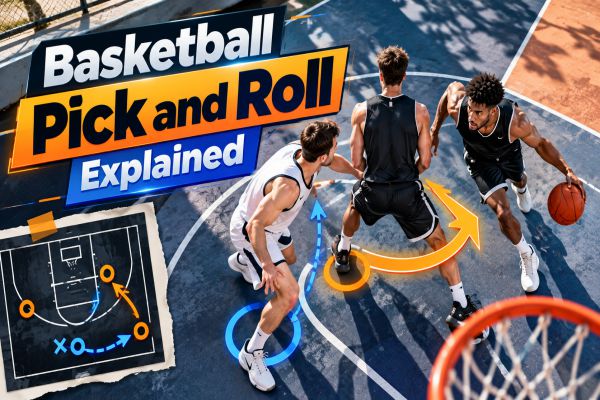
Basketball Pick and Roll Explained: The Ultimate Tactical Guide
When basketball pick and roll explained is what you are searching for, viewing it purely as a two-man drill on paper misses what actually makes it work. On the court, a pick and roll is not a set play with a guaranteed outcome; it is a dynamic reaction to how the defense responds. Whether you […]
Basketball Shot Clock Explained: Simple Rules & Timing
When basketball shot clock explained is what you need to keep up with the game, watching the small digital timer countdown above the backboard can add an extra layer of tension to every possession. The shot clock is one of the most important tactical elements in modern basketball, dictating the tempo of play and forcing […]