





When basketball fouls explained is what you need to make sense of a game, watching the referee suddenly blow the whistle and make dramatic hand signals can feel confusing. Players throw their hands up in protest, coaches shout from the sidelines, and free-throw shooting begins. Physical contact is an inevitable part of a fast-paced sport like basketball, but the rulebook strictly regulates which contact is legal and which crosses the line into a foul. Understanding how fouls work, why they are called, and how they impact the flow of the game will transform your viewing experience from guesswork into clear strategy.
Understanding the core types of basketball fouls
In basketball, fouls are illegal actions that violate the rules of fair play and safety. Unlike minor violations (such as traveling or step-outs), fouls involve illegal physical contact or unsportsmanlike conduct and result in direct penalties for the offending team. Referees categorize these infractions into distinct types depending on the nature and severity of the action.
Personal fouls and physical contact
Personal fouls are the most common infractions in a game, occurring when a player makes illegal physical contact with an opponent. Referees watch closely to see which player created the unfair advantage through body contact.
- Defensive personal fouls: These occur when a defender uses their body, arms, or legs to restrict an opponent’s movement. Common examples include reach-in fouls (slapping at the ball and hitting the hand/arm), blocking (moving into a ball-handler’s path without establishing a legal position), and pushing.
- Offensive personal fouls: Offensive players can also commit fouls. The most frequent is a charging foul, which happens when a player driving toward the basket runs directly into a defender who has already established a set, legal guarding position.
Shooting fouls and free-throw penalties
A shooting foul is a specific personal foul committed against a player who is in the act of shooting the ball. The penalty for a shooting foul is designed to give the offended team a fair scoring opportunity.
- Two or three free throws: If a player is fouled while attempting a two-point shot and misses, they are awarded two free throws. If they are fouled during a three-point attempt and miss, they receive three free throws.
- The “And-One” scenario: If the shooter is fouled but still manages to make the basket, the points count, and they are awarded one additional free throw.
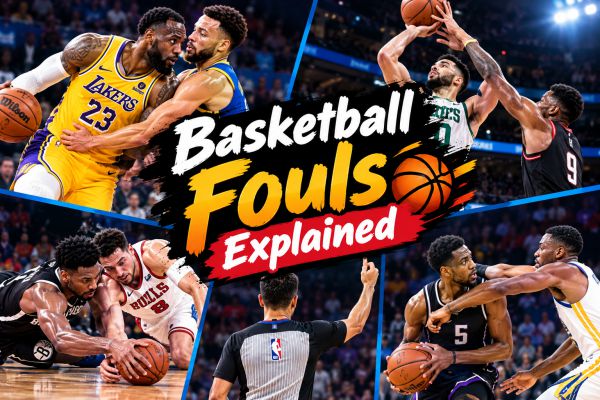
Basketball fouls explained
Technical fouls and unsportsmanlike behavior
Technical fouls do not focus on physical plays during live action; instead, they address behavioral infractions, conduct violations, and tactical rule breaches.
- Conduct infractions: Arguing aggressively with referees, using abusive language toward opponents, or slamming the ball on the floor in frustration frequently lead to technical fouls.
- Game management violations: Calling a timeout when the team has none left or delaying the game repeatedly can also trigger a technical foul. The opposing team is awarded free throws, and in many leagues, the ball is returned to them for possession.
Flagrant fouls and player safety
Flagrant fouls are severe personal fouls called when physical contact is deemed excessive, reckless, or violent. These rules exist primarily to protect player safety on the court.
- Flagrant 1: Contact that is unnecessary or dangerous, such as hitting a player hard across the head while they are in mid-air. The offended team receives free throws and retains possession of the ball.
- Flagrant 2: Contact that is both unnecessary and excessive, involving intentional hostility or violence. A Flagrant 2 results in free throws, possession, and the immediate ejection of the offending player from the game.
Conclusion
Having basketball fouls explained clearly gives you a complete perspective on how games are managed and decided. While the sudden stoppage of play might seem frustrating at first, fouls are essential tools that keep the sport safe, competitive, and balanced. From standard defensive contact to serious flagrant calls, recognizing these key boundaries allows you to read the game like a seasoned analyst.
Related Posts
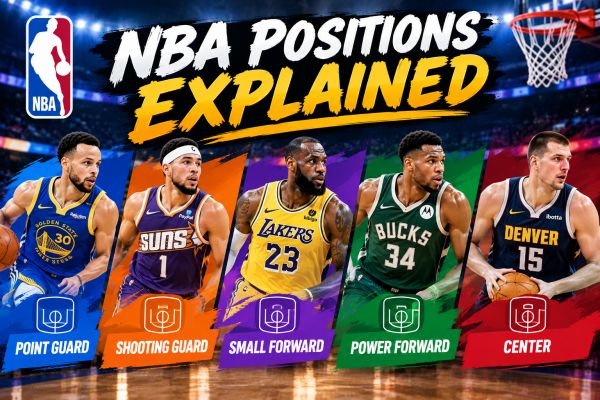
NBA Positions Explained: The 5 On-Court Roles
When NBA positions explained is what you are looking for, turning on a professional game can sometimes feel overwhelming. Today’s high-flying NBA superstars constantly cross up defenders, shoot from deep beyond the arc, and run transition plays at lightning speed. Yet, underneath the highlight-reel dunks and tactical rotations, every team relies on a standard system […]
Basketball Rules Explained: A Beginner’s Guide
When you want basketball rules explained without wading through a dense rulebook, watching a fast-paced game on television can feel confusing. With players sprinting back and forth, the constant squeak of sneakers, and whistles blowing seemingly every minute, it is easy to feel lost. However, beneath the high-energy action, basketball is governed by a clear, […]
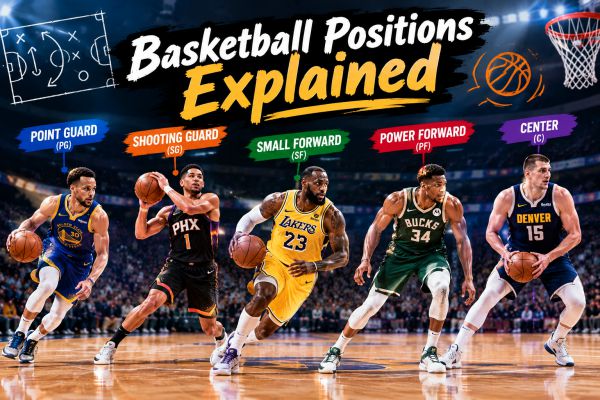
Basketball Positions Explained: Simple Court Roles
When basketball positions explained is what you are looking for, watching a game for the first time can still feel a bit overwhelming. Players move fluidly across the hardwood, passing, shooting, and switching assignments in a matter of seconds. However, underneath the fast-paced action, basketball is built on a foundation of five distinct positions. Whether […]
Basketball Shoes Of 2026: Innovations And Performance Standards
Exploring the Basketball Shoes of 2026 reveals a transformative era in sports footwear engineering. This year’s landscape is defined by major advancements in nitrogen-infused foam chemistry, generative 3D foot-mapping traction patterns, and carbon-composite propulsion plates. Whether you are a lightning-fast perimeter playmaker looking for zero-lag responsiveness or a powerhouse center needing max-volume impact protection, the […]