




Searching for the best basketball shoes for ankle support is a top priority for players dealing with previous ankle sprains, weak ligaments, or the fear of landing awkwardly on another player’s foot. Ankle injuries represent the most common trauma in basketball, often sidelining players for weeks or resulting in chronic instability if not protected properly.
However, many players mistakenly believe that simply wearing a high-top shoe guarantees immunity from rolled ankles. In reality, ankle protection is driven by a complex interplay of heel containment, midfoot torsional rigidity, outsole base width, and reliable traction. A high-cut collar with poor heel lockdown can still allow your foot to slide and roll inside the shoe.
To protect your joints and step onto the floor with total confidence, you need footwear engineered to lock your foot in place and provide a wide, stable foundation. This guide breaks down the true mechanics of ankle protection, essential technical features to look for, targeted shoe categories, and practical safety tips.
A complete guide to basketball shoes with elite ankle protection
Debunking the high-top myth and understanding ankle mechanics
Before selecting a shoe, it is vital to understand what actually causes an ankle inversion sprain during play:
- The High-Top Fallacy: Sports biomechanics research shows that the material of a high-top collar alone cannot prevent an ankle sprain when full body weight rolls over. High-tops provide sensory awareness (proprioception), but structural stability comes from the midsole and heel foundation.
- Internal foot slippage: Most sprains occur when the foot shifts laterally inside the shoe during a hard plant or landing. If your heel lifts or slides off the footbed, the ankle loses its structural alignment and rolls outward.
- Torsional twisting under weight: When landing on an opponent’s shoe or taking an off-balance step, a shoe with a flexible midfoot will twist uncontrollably, carrying your ankle bone down toward the floor.
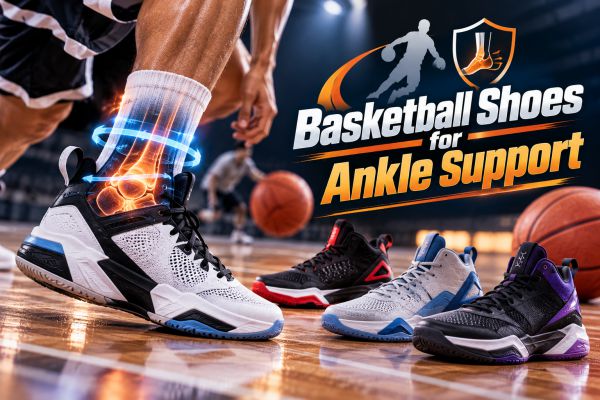
Basketball shoes for ankle support
Key technical features that genuinely prevent ankle sprains
To ensure maximum foot containment and joint safety, evaluate any prospective basketball shoe against these four mandatory structural pillars:
- A wide base footprint with an outrigger
The primary defense against ankle rolls is an extended lateral outrigger—a solid rubber flare on the outer edge of the forefoot near the pinky toe. This creates a wider tripod base, making it physically harder for the shoe to tip over during sharp lateral movements. - Rigid internal or external heel counters
Look for shoes with a deep, stiff heel cup (made of molded TPU or plastic) embedded in the rearfoot. A strong heel counter locks your calcaneus bone securely in place, stopping the rearfoot from sliding side-to-side upon impact. - Stiff midfoot torsional shank plates
A rigid shank plate made of TPU, fiberglass, or carbon fiber positioned between the heel and forefoot prevents the shoe from wringing like a towel. This forces the shoe to flex only at the toe joints, keeping your arch and ankle structurally aligned. - Biting, reliable traction
Slipping is a major cause of sudden, unexpected ankle rolls. A high-friction outsole pattern (such as aggressive herringbone or multidirectional radial tread) ensures your foot plants firmly without unexpectedly sliding out from under your center of gravity.
Shoe profiles suited for different ankle stability requirements
When looking for the best basketball shoes for ankle support, matching the shoe construction to your specific safety setup yields the best results:
- For players who wear rigid ankle braces (Brace-Friendly Models)
- Focus: Removable insoles, wide entry collars, flat volume toe boxes, durable uppers.
- Top Shoe Profiles: Shoes like the adidas Dame series, Nike Precision line, or select Asics basketball models offer wide anatomical fits and adaptable eyelet systems that accommodate bulky lace-up ankle braces without pinching.
- For maximum lockdown and traditional support (Heavy Containment)
- Focus: High/mid collars, external heel cages, midfoot lockdown straps, thick outriggers.
- Top Shoe Profiles: Supportive flagship models—such as the Nike LeBron main line, Jordan Air main line, or 361° Joker series—provide maximum structural containment, heavy cushioning stacks, and ultra-stiff heel counters for total rearfoot security.
- For agile guards wanting low-cut freedom with high stability (Modern Low-Tops)
- Focus: Ultra-wide outriggers, rigid midfoot shank plates, deep internal heel Achilles pillows.
- Top Shoe Profiles: Low-cut stability performers like the New Balance TWO WXY line, Li-Ning Way of Wade 808 series, or Puma All-Pro Nitro feature exceptionally wide bases and carbon shank plates, offering elite ankle protection without restricting collar mobility.
Lacing techniques and brace compatibility for maximum safety
Maximizing ankle protection requires proper fitting habits and strategic lacing:
- Use the runner’s loop (Heel-Lock Lacing): Utilize the very top extra eyelet near the ankle collar to tie a “runner’s loop” knot. This pulls the collar material backward and downward simultaneously, forcing your heel deep into the back heel counter and completely eliminating internal heel slip.
- Check fit when wearing braces: If you wear supportive ankle sleeves or rigid braces, always bring them with you when trying on shoes. You may need to go up half a size to accommodate the extra bulk around the ankle collar without crushing your midfoot.
- Replace worn-out outsoles promptly: Once the rubber outrigger wears down or the midsole foam flattens out on the lateral side, the shoe loses its level foundation. Playing in unevenly worn shoes tilts your foot outward, significantly increasing the risk of an ankle sprain.
Summary
Securing reliable ankle protection requires looking beyond collar height. Prioritize wide outrigger bases, stiff midfoot shank plates, firm heel counters, and biting traction over traditional high-top designs. Selecting footwear built around these containment principles will protect your ligaments, stabilize your landings, and keep you performing safely every game.
Related Posts
How To Choose the Right Basketball Shoes For Beginners
Selecting the best basketball shoes for beginners is a crucial first step when entering the sport. Unlike experienced players who already know their exact court position, foot mechanics, and brand preferences, new players need footwear that offers all-around protection, reliable comfort, and great value for money. Stepping onto a basketball court introduces foot movements that […]
Basketball Shoes For Indoor Courts: Balancing Hardwood Grip And Explosive Responsiveness
Selecting the best basketball shoes for indoor courts allows players to unlock their full athletic potential. Unlike rough concrete blacktops that shred outsoles within weeks, indoor hardwood and synthetic courts offer a clean, springy playing surface. This controlled environment enables manufacturers to utilize softer, sticky rubber compounds and ultra-responsive cushioning systems designed purely for elite […]
Basketball Shoes For Outdoor Basketball: Protecting Your Joints And Your Footwear
Selecting the best basketball shoes for outdoor basketball requires a completely different mindset than shopping for an indoor pair. While playing on polished hardwood provides natural shock absorption and preserves soft rubber outsoles, outdoor streetball courts act like sandpaper on your footwear while exerting harsh, unrelenting forces on your joints. Many players make the mistake […]
Basketball Shoes For Centers: Balancing Impact Cushioning And Court Stability
Finding the best basketball shoes for centers is one of the most critical footwear decisions a big man can make. While lightweight guards thrive on thin midsoles and razor-sharp court feel, centers operate in a high-impact zone dominated by physical post-up battles, heavy screen setting, violent box-outs, and intense landing impacts after contested rebounds. When […]