




Playing guard in basketball requires constant movement, quick reactions, and precise control. Whether you handle the ball as a point guard or create scoring opportunities as a shooting guard, your shoes influence how confidently you move on the court. Every acceleration, sudden stop, crossover, and defensive slide places different demands on your footwear.
However, choosing basketball shoes for guards is not simply about finding the lightest pair or the model with the most advanced cushioning. A shoe that feels fast during warm-ups may not provide enough stability during aggressive direction changes. Similarly, a heavily cushioned model might feel comfortable but offer a court feel that does not match your playing style.
The right choice comes down to understanding your movement patterns, the surfaces you play on, and the features that genuinely improve your experience. Instead of focusing only on brand names or marketing claims, it helps to evaluate how each shoe performs in the situations you encounter during a game.
How to Choose Basketball Shoes That Match Your Game as a Guard
What Guards Need Most From Their Basketball Shoes
Guards often spend a significant amount of time accelerating, decelerating, changing direction, and moving laterally. These movements make traction, stability, and responsiveness particularly important when choosing basketball shoes.
Traction and grip are essential when you need to stop quickly, drive past a defender, or change direction without losing your footing. A dependable outsole helps you maintain control during sudden movements. However, traction depends on several factors, including the rubber compound, tread pattern, court surface, and amount of dust on the floor. Even shoes with excellent traction can struggle on a dusty court.
Lightweight construction can make a shoe feel more agile during fast transitions and repeated sprints. Guards who rely on speed may prefer a relatively light design that does not feel cumbersome. Nevertheless, weight should not be the only consideration. A slightly heavier shoe that offers better stability and a more secure fit may be more suitable for your needs.
Stability and support become especially important when making sharp cuts or defending against quick opponents. A secure heel, supportive upper, and well-designed base can help your foot remain properly positioned inside the shoe. These features are particularly valuable for players who frequently move laterally or land at different angles.
Cushioning and responsiveness also deserve attention. Cushioning helps manage the impact associated with jumping and landing, while responsiveness influences how quickly the shoe feels ready for the next movement. Some players prefer a lower-to-the-ground design for a more direct court feel, while others appreciate additional cushioning during longer sessions.
There is no universal combination that works for every guard. The goal is to find a balance that supports your movement without sacrificing comfort, stability, or control.
How Point Guards and Shooting Guards Differ in Their Shoe Needs
Although point guards and shooting guards share many movement demands, their responsibilities can influence which shoe features matter most.
Point guards frequently control the pace of the game, handle the ball under pressure, and create opportunities through changes of speed and direction. They may benefit from shoes that feel agile, provide dependable traction, and allow precise foot placement during crossovers and quick stops.
For a point guard who relies on rapid acceleration, a responsive design with a secure fit may feel more natural than a bulky shoe with excessive cushioning. However, players who regularly attack the basket or absorb contact should not overlook stability and impact protection.
Shooting guards often combine perimeter movement with cutting, jumping, shooting, and defensive assignments. Depending on their role, they may need a more balanced combination of traction, cushioning, and lateral support.
A shooting guard who frequently moves without the ball may value grip and stability when changing direction around screens. A player who attacks the rim or takes contested jump shots may place greater importance on comfortable landings and secure foot containment.
These differences are useful starting points rather than strict rules. A point guard who drives into the paint frequently may need substantial impact protection, while a shooting guard who depends on speed and perimeter defense may prefer a lighter, more responsive shoe.
Your physical build, foot shape, injury history, playing frequency, and personal comfort can matter just as much as your position. The best approach is to choose based on how you actually play rather than relying on your position alone.
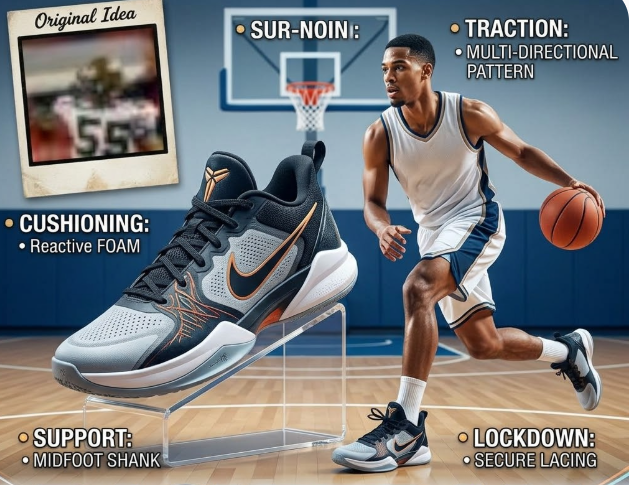
basketball shoes for guards
Which Features Matter Most for Grip, Fit, Cushioning, and Stability?
When comparing basketball shoes for guards, evaluating individual features makes it easier to understand why one model may suit you better than another.
Grip and outsole design
Look at the tread pattern and rubber construction, but also consider where you normally play. Indoor courts and outdoor surfaces place different demands on an outsole. Some softer rubber compounds can provide strong indoor traction but wear more quickly on rough outdoor concrete.
If you regularly play outdoors, durability may deserve more attention than it would for someone who plays exclusively on clean indoor courts. Regardless of the setting, keep in mind that dust, moisture, and court maintenance can influence traction.
Fit and lockdown
A basketball shoe should feel secure without creating painful pressure points. Your heel should remain reasonably stable, and your foot should not slide excessively inside the shoe during lateral movement. There should also be enough room for your toes to move naturally.
Players with wider feet may need a wider last or a model with a more accommodating forefoot. Choosing a shoe that is too narrow in the hope of obtaining better lockdown can lead to discomfort and distract you during games.
Try shoes with the socks you normally wear for basketball. Lace them properly, walk around, and perform controlled movements if the store allows it. Pay attention to heel movement, pressure around the midfoot, and whether your toes feel cramped.
Cushioning and court feel
Cushioning preferences vary considerably. Some players want a softer landing experience, particularly if they jump frequently or play for extended periods. Others prefer a firmer platform that provides a more direct connection to the floor.
Neither approach is automatically superior. The important question is whether the cushioning feels comfortable and predictable during your typical movements. A shoe should not feel unstable or make it difficult for you to control your foot placement.
Lateral stability and support
Basketball involves repeated side-to-side movement, so consider how securely the shoe holds your foot during changes of direction. The width and shape of the base, upper construction, heel design, and overall fit can all affect the feeling of stability.
Ankle height alone does not determine how supportive or protective a basketball shoe will be. A high-top design is not automatically safer than a low-top model. Fit, construction, movement control, and individual needs all matter.
Finally, consider the relationship between these features. Excellent traction cannot compensate for an uncomfortable fit, and soft cushioning does not necessarily mean a shoe offers good lateral stability. Evaluate the complete design rather than judging a pair by one specification.
How to Compare Basketball Shoes and Find the Right Pair for Your Budget
Once you understand your priorities, comparing individual models becomes much easier. Rather than buying a shoe because a professional player wears it or because it receives attention online, start with the characteristics that matter most to your game.
Begin by identifying your main playing needs. If you rely on speed and frequent changes of direction, prioritize traction, lockdown, and a responsive feel. If you jump often and experience discomfort during landings, pay closer attention to cushioning and overall comfort. If you play outdoors several times a week, consider outsole durability alongside grip.
Next, compare a small number of models using the same criteria. Product descriptions can help you understand the intended design, but independent performance reviews, detailed fit reports, and long-term user feedback can provide additional context. Look for reviews that explain the conditions in which the shoes were tested, especially the court surface and the reviewer’s foot shape.
Price should be considered in relation to your actual needs. An expensive signature shoe may offer features that you appreciate, but it is not necessarily a better choice for your playing style. An older model or a more affordable performance shoe may provide the traction, support, and comfort you need without stretching your budget.
Before purchasing, use this checklist:
- Fit: Does the shoe feel secure without squeezing your foot?
- Traction: Is the outsole appropriate for your usual playing surface?
- Stability: Does your foot remain secure during lateral movements?
- Cushioning: Does the landing feel comfortable and controlled?
- Responsiveness: Can you accelerate, stop, and change direction naturally?
- Durability: Is the outsole suitable for how frequently and where you play?
- Value: Are the features worth the price for your specific needs?
If possible, try the shoes on before making a final decision. Walk, bend your knees, and perform controlled lateral movements to identify any pressure points or unwanted movement inside the shoe. Online size charts are useful, but sizing can vary between brands and models.
It is also worth checking the return policy, especially when ordering online. This gives you a clearer understanding of your options if the fit does not meet your expectations.
Ultimately, the right basketball shoes for guards are the ones that match your playing style, fit your feet properly, and perform consistently on your usual court. Focus on the features that make a noticeable difference to your movement rather than chasing a particular brand, price point, or popular model. When traction, stability, cushioning, and fit work together, you can concentrate more on reading the defense, creating opportunities, and playing your game with confidence.
Related Posts

[Top-Rated] The Best Basketball Shoes For Ankle Support 2025
When participating in basketball competitions, the occurrence of injuries is widespread. To avoid those problems, you need the best basketball shoes for ankle support. There are many types of basketball shoes on the market. However, when it comes to ankle support, not all shoes are created equal. In this article, Scott Fujita will guide you […]

Spalding TF-1000 Classic Review: Is It The Best Basketball?
The Spalding TF 1000 Classic is the legendary indoor basketball for those who grew up with basketball in their memory. The image of this ball is associated with the NBA tournament. It has been an icon of basketball for a long time. Time flies, and things aren’t as they used to be, and at some […]

Unveiling the Best Nike Basketball Shoes of 2024: Elevating Your Game to New Heights
In the dynamic world of basketball, where fans obsess over NBA odds and pore over the top basketball lines, it’s critical to comprehend the subtle differences that make some players stand out. A good game might be distinguished from an exceptional one by the footwear you choose. Nike, a brand well-known across the globe for athletic footwear, […]

The Best Outdoor Basketball 2024 at Amazon: Reviews and Useful Tips
Basketball is a sport that many people love and choose to play to develop height and health. To practice proficient basketball skills, selecting the best basketball is essential. It will not be too difficult for players to choose a cheap basketball on the market. However, players need to grasp the basic knowledge. Scott Fujita has […]